
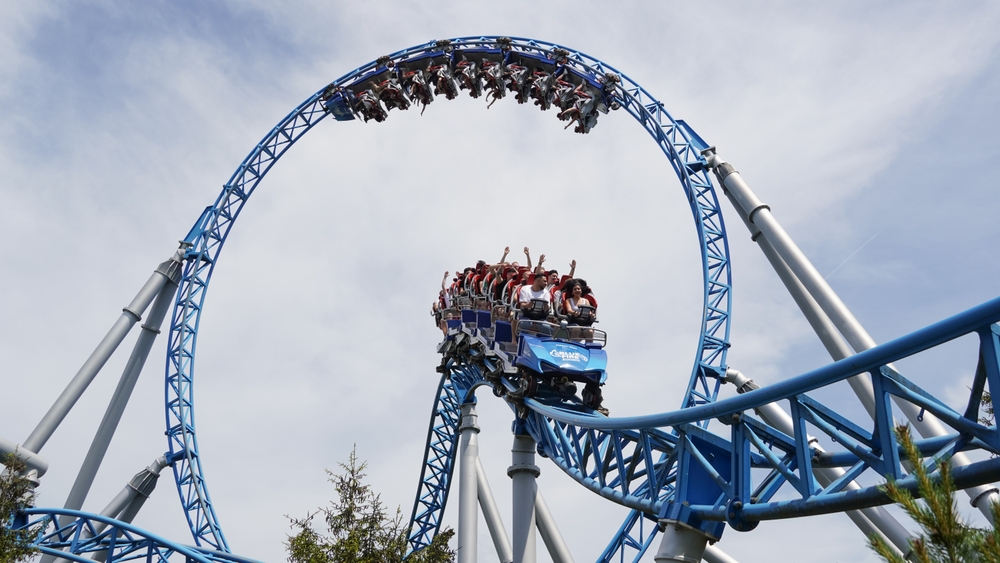
Topsy Turvy
If you have ever been on Space Mountain, you have a sense of the past week: lots of sharp ups and downs, sudden twists, and blind turns. While the headline index levels had not changed dramatically over the last few months, a violent churn was brewing under the surface. Things weren’t exactly broken, but they certainly weren’t right.
The artificial intelligence buildout has been operating as an all-out, existentially critical race to produce the most dominant models. However, that effort is now colliding with financial reality. Every major hyperscaler, with the notable exception of Microsoft, has turned free cash flow negative, forcing them to actively raise massive amounts of debt capital just to keep pace. The trouble is that the wheels are beginning to fall off in the bond market due to this relentless demand for cash. Because bondholders do not enjoy equity-like upside—only the promise of getting their principal back with fixed interest—they are demanding concrete evidence of financial returns.
The recent election, which essentially voted to restrict datacenter expansion, proved to be the straw that broke the camel’s back. Stock market mayhem ensued as investors were forced to recalibrate the expected AI winners and losers. It was an incredibly intense week, leaving the disappearance of endless political ads on television as the solitary bit of good news.
The selling turned particularly ugly on Thursday, when the S&P 500 declined 4.36% and the NASDAQ plummeted 5.52%. The true epicenter of the pain was the tech and AI sector, where the Nasdaq CTA Artificial Intelligence Index dropped 7.91%. The rest of the market simply came along for a ride. Friday produced a typical bounce after a major fall, though it was not a particularly convincing rally.
Several critical perspectives help put this volatility into context:
- AI stocks had climbed a bit too far over their skis and were desperately overdue for a breather.
- Equity market drawdowns of 5% to 10% happen regularly, and this episode does not fundamentally look any different from historical precedents.
- Even after Thursday’s rout, the S&P 500 remains up roughly 7.75% for the year, which is far from the absolute disaster that the headlines implied.
Finally, the growing anxiety that datacenter investment will suddenly grind to a halt is likely misguided. While political shifts point toward a desire for more rationality and regulation surrounding AI progress, it’s very hard to imagine that Democratic leadership has any intention of killing the goose that is driving U.S. economic growth.
The market will eventually pull out of this drawdown, even if the healing process takes a bit of time. While market advances typically go up the escalator, market declines tend to take the elevator; the drops typically occur rapidly. It is already clear that the market environment on the other side of this correction will look very different. We should not expect equities to behave as they have over the last few years. The realization that implementing AI will require immense operational work, and will likely develop in ways we cannot yet imagine, changes the entire investment calculus. We expect investors to become far more discerning and critical.
In response to this shifting landscape, we are closely examining the new terrain. We may make select tactical adjustments to portfolios, but we will firmly maintain our core diversification, and no wholesale changes are expected.
Whether the correction has concluded with Friday’s rally remains unknown, as no one can predict short-term market bottoms (or tops) with any precision. However, the ferocity of the decline suggests this is deeper than a simple reassessment of AI valuations. Investor positioning entering this window was incredibly crowded, and margin debt was at elevated levels. The speed of the drop indicates that leveraged investors were rapidly deleveraging, if not facing forced liquidations. Because these kinds of structural unwinds take time to settle out, the current episode could linger for a while longer.
Ultimately, we view this transition as highly constructive for the long-term health of the market. It represents a much-needed, healthy reset for a heavily concentrated AI trade that had grown entirely too dominant.
Gridlock
The stock market generally prefers political gridlock, and election night delivered. The Democratic sweep of Congress creates a counterweight to the president on legislation, spending, and nominations that require Senate confirmation.
Had Republicans retained control of the Senate, those constraints would have been more limited. Legislation would have faced hurdles either way, but Democratic control of both chambers sets the stage for contentious spending negotiations and difficult confirmation battles for judicial and Cabinet nominees.
In short, gridlock.
Why Markets Prefer Gridlock
Markets tend to favor predictability, and divided government makes significant policy changes harder to enact. That can reduce the risk of sweeping legislative or regulatory shifts, giving businesses and investors a more stable framework for planning.
The downside is that even necessary action—such as raising the debt ceiling—can become difficult. Still, gridlock tends to constrain both parties’ more ambitious agendas, which is why we favored divided government two years ago.
The Federal Deficit
On Wednesday, Bloomberg reported that the U.S. Treasury borrowed a record $839 billion in a single week. Those funds were raised both to repay holders of maturing debt and to finance the ongoing federal deficit.
The bond market has grown increasingly uneasy about federal borrowing and the enormous capital demands of the data center buildout. The election, however, may offer some relief on the fiscal side. Divided government could make large new spending programs harder to enact, potentially slowing the growth of federal spending.
Inflation still needs to come down, but slower growth in deficit spending could ease upward pressure on Treasury yields. Lower yields would, in turn, translate into lower mortgage rates, providing a welcome boost to the housing industry.
The Iran War
The election may increase pressure to bring the war to an end. Further military action remains possible, including another major bombardment, but a divided government could make it more difficult to sustain the conflict and increase the incentive to negotiate.
An agreement that restores Gulf exports and allows refineries to ramp up fuel production could help ease energy inflation. The timing would depend on the terms of a deal and the pace of recovery, but a sustained improvement in energy supplies could remove another source of upward pressure on interest rates.
Tariffs
Tariffs are unlikely to disappear simply because control of Congress has changed. The president retains substantial tariff authority, although the scope and use of that authority will continue to face legal challenges.
Congress could seek to limit those powers, but passing legislation is only part of the challenge. Trump could veto such a bill, requiring a two-thirds majority in both chambers to override him. Democrats would therefore need substantial Republican support to enact restrictions over his objections.
AI and Data Centers
Restrictions on data center development emerged as an election theme, particularly among Democrats. At the federal level, that could translate into efforts to regulate AI models and address their risks. The more immediate constraints on construction, however, may come from state-level policies, including proposed moratoriums.
According to Goldman Sachs, nearly 47% of planned data centers are in states won by Democrats. (See chart below.) Texas is especially important: it accounts for more than 25% of planned development, and its incoming governor campaigned on an immediate moratorium.
Following through on that pledge could significantly slow construction, however, the governor-elect already appears to be softening that position, so the scope of any restrictions remains uncertain.
If these policies take effect, the rapid growth in hyperscaler spending could finally moderate, reducing demand for GPUs, memory, power, and other infrastructure. Any slowdown would also likely prompt a heated debate over whether development restrictions risk allowing China to overtake the United States in AI. The AI debate appears likely to remain on the front burner.
Healthcare
Healthcare funding is projected to recover. While the President has indicated his intent to use veto power extensively, Democrats now have control over federal appropriations. Consequently, these spending changes can be enacted through structural legislative leverage without requiring Presidential approval.
The Economy
The rapid expansion of data center infrastructure operates as a double-edged sword, significantly driving both GDP growth and inflationary pressures. Implementing policies that restrict or slow down this construction is expected to reverse these effects, creating a headwind for broader economic growth while decelerating inflation.
- Consumer Relief: Slower inflation directly improves consumer purchasing power.
- Monetary Policy: Weakening economic growth and lower inflation give the Federal Reserve flexibility to lower interest rates.
- Housing Revival: Reduced interest rates should stimulate and revive housing market activity.
- Labor Impact: Unemployment risks increasing if the expansion of data centers decelerates significantly.
Ultimately, the net economic impact of this legislative gridlock hinges on a delicate balance: the slowdown of AI infrastructure investment weighed against the potential relief delivered to interest-sensitive sectors.
Have a great week!
What We’re Reading
-
Corporate America got billions of dollars in tariff refunds. Where’s your cut?
-
Massive tech sell-off wipes $2.5 trillion from the stock market
-
Questions over capex, monetization loom over AI buildout (video 9 min.)
Palumbo Wealth Management (PWM) is a registered investment advisor. Advisory services are only offered to clients or prospective clients where PWM and its representatives are properly licensed or exempt from licensure. For additional information, please visit our website at www.palumbowm.com.
The information provided is for educational and informational purposes only and does not constitute investment advice and it should not be relied on as such. It should not be considered a solicitation to buy or an offer to sell a security. It does not take into account any investor’s particular investment objectives, strategies, tax status, or investment horizon. You should consult your attorney or tax advisor.
The views expressed in this commentary are subject to change based on market and other conditions. These documents may contain certain statements that may be deemed forward‐looking statements. Please note that any such statements are not guarantees of any future performance and actual results or developments may differ materially from those projected. Any projections, market outlooks, or estimates are based upon certain assumptions and should not be construed as indicative of actual events that will occur.
All information has been obtained from sources believed to be dependable, but its accuracy is not guaranteed. There is no representation or warranty as to the current accuracy, reliability, or completeness of, nor liability for, decisions based on such information and it should not be relied on as such.
All information has been obtained from sources believed to be dependable, but its accuracy is not guaranteed. There is no representation or warranty as to the current accuracy, reliability, or completeness of, nor liability for, decisions based on such information, and it should not be relied on as such.
The views expressed in this commentary are subject to change based on the market and other conditions. These documents may contain certain statements that may be deemed forward‐looking statements. Please note that no such statements are guarantees of any future performance, and actual results or developments may differ materially from those projected. Any projections, market outlooks, or estimates are based upon certain assumptions and should not be construed as indicative of actual events that will occur.
Past performance is no guarantee of future returns.
AI, AI buildout, AI capex, ai data centers, AI Infrastructure buildout, divided government, Election, government gridlock, Gridlock
By: Adam
